“Whether a style is figurative or not, the truth is that Art is always abstract” (José PEREIRA)

The Artist

José Pereira Rodriguez is a French painter of Uruguayan origin.

From an early age, José Pereira showed a strong vocation for the plastic arts. This vocation led him to the studio of painter Manolo Lima (a disciple of Master Joaquín Torres García), who introduced him to painting techniques and the Master’s theories.

He then completed his artistic training at the Montevideo School of Fine Arts, under the guidance of Master Miguel Ángel Pareja, whose curriculum and teaching were based on Bauhaus techniques.

In 1968, he decided to move to Paris, France. Since then, he has taken part in numerous solo and group exhibitions in France, Spain, Belgium, Germany, Italy, the United States and Uruguay, for which he has received favorable reviews from many specialized critics.

A contemporary artist, he draws his inspiration from the various movements of Modern Art, such as Surrealism, Expressionism, Cubism and Constructivism, and is part of a long line of painters who have inherited and carried forward the evolution of abstract art, launched by Kandinsky, right up to the present day.

Painter José PEREIRA passed away in 2016 at the age of 76, leaving a unique artistic legacy and an impressive collection of Works of Art to which he devoted his entire life, and which still bear witness today to the artist’s genius.
The work of the contemporary painter José PEREIRA is today represented in different museums, and the artist has taken part in numerous solo and group exhibitions in France, Spain, Belgium, Germany, Italy, the United States, Uruguay, …
Museums list
  • Museum of Modern Art in Ostend (Belgium)
  • Fond des Arts Plastiques of Museum of Modern Art in Paris (France)
  • Itinerant Museum Salvador Allende SETE Paris (France)
  • Museum "Luis Gonzalez Robles" Alcalá de Henares (Madrid - Spain)
Exhibitions list
  • National School of Fine Arts - Montevideo (Uruguay)
  • Group Mercado Viejo - Montevideo (Uruguay)
  • Cultural house - Rivera (uruguay)
  • Mural of EPOCA Newspaper - Montevideo (Uruguay)
  • U Galery - Montevideo (Uruguay)
  • DIA Galery - Montevideo and Punta del Este (Uruguay)
  • Young Men Christians Assoc. - Montevideo (Uruguay)
  • National des Beaux Arts Museum - Lilles (France)
  • Baukunst Galery - Cologne (Germany)
  • Albert Loeb Galery - Paris (France)
  • Exhibition of South American artists - Paris (France)
  • Ixelles Ywca Museum - Ixelles (Belgium)
  • Galery du Soleil - Paris (France)
  • Galery Delpine - Paris (France)
  • Galery of Editions du Musée de Poche - Paris (France)
  • Galery of France and Benelux - Bruxelle (Belgium)
  • Mural in the premises of the ANPE - Neuilly (France)
  • Travelling Exhibition Salvador Allende - (France)
  • Galery Triskele - Paris (France)
  • Galery Bad Honnef (Germany)
  • Lubam Cultural Center - Sabionneta (Italie)
  • French Italian Cultural Association - Bari (Italie)
  • Galery Moss - San Francisco (USA)
  • Galery Fauna's - Madrid (Spain)
  • L'Uruguay et ses Artisites - Paris (France)
  • L'Uruguay et ses Artisites - Le Caire (Egypt)
  • Private Exhibition B. Heier - Wiesbaden (Germany)
  • Château de l'Institut - Rambouillet (France) Galery TEC - Bordeaux (France)
  • Uruguay Ambassy - Paris (France)
  • Galery Feuervogel - Frankenthal (Germany)
  • Inselgalerie Rettbersaue - Wiesbaden (Germany)
  • Galery les Lumières - Nanterre (France)
  • Galery DIAG - Frankfurt (Germany)
  • Galery im LZW - Wiesbaden (Germany)
  • Galery Gisela Heier - Wiesbaden (Germany)

Artistic journey

Art Reviews

“With thematic intention in the search for new forms of expression a coherent process is discerned in this work. From Neo-Figurativism, in which the artist’s mastery of space stands out, to the disintegration of the image with the purest of Constructivist conceptions through the sense of order and perfection.”
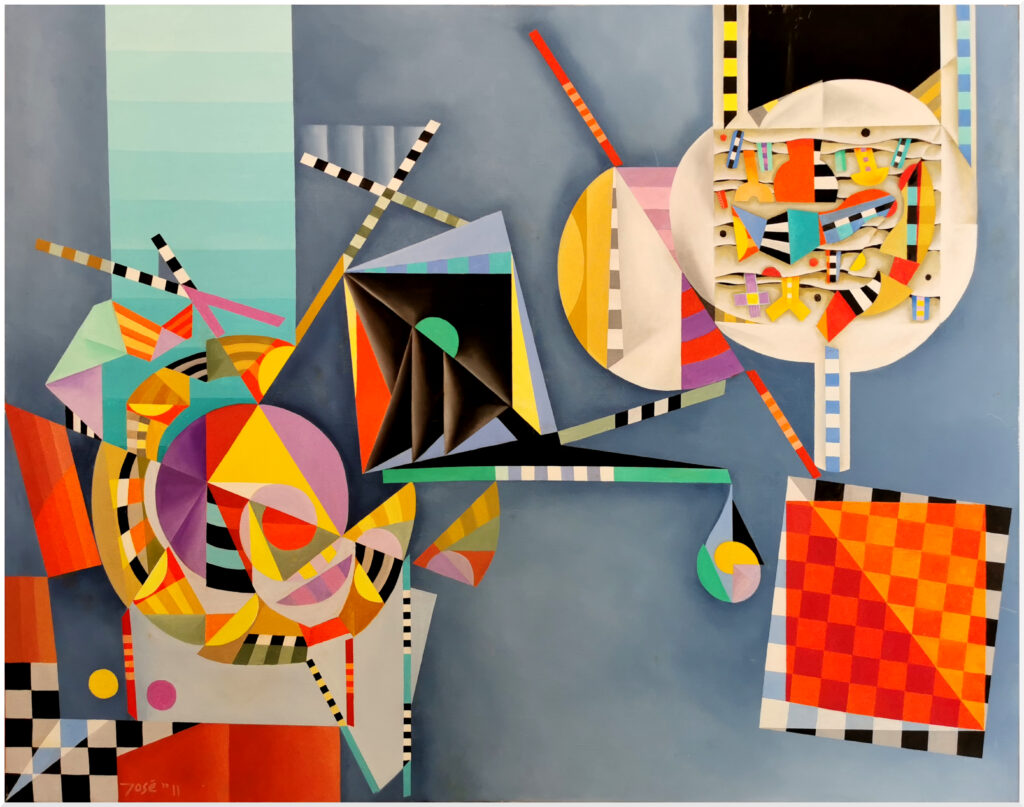
Art Iberoamericain 1900 – 1990 - Directeur Editorial Luis Gonzáles ROBLES - Editions UNESCO (Madrid 1996)

“José Pereira’s works fascinate us by the richness of colors and impress us by their expressive strength.
The composition and the combination of colors and formal elements are as well poetical as plastic, creating a vibrating tension.
In strictly pictorial fields we discover blended forms; labyrinths that lend wings to the fantasy of the observer.”
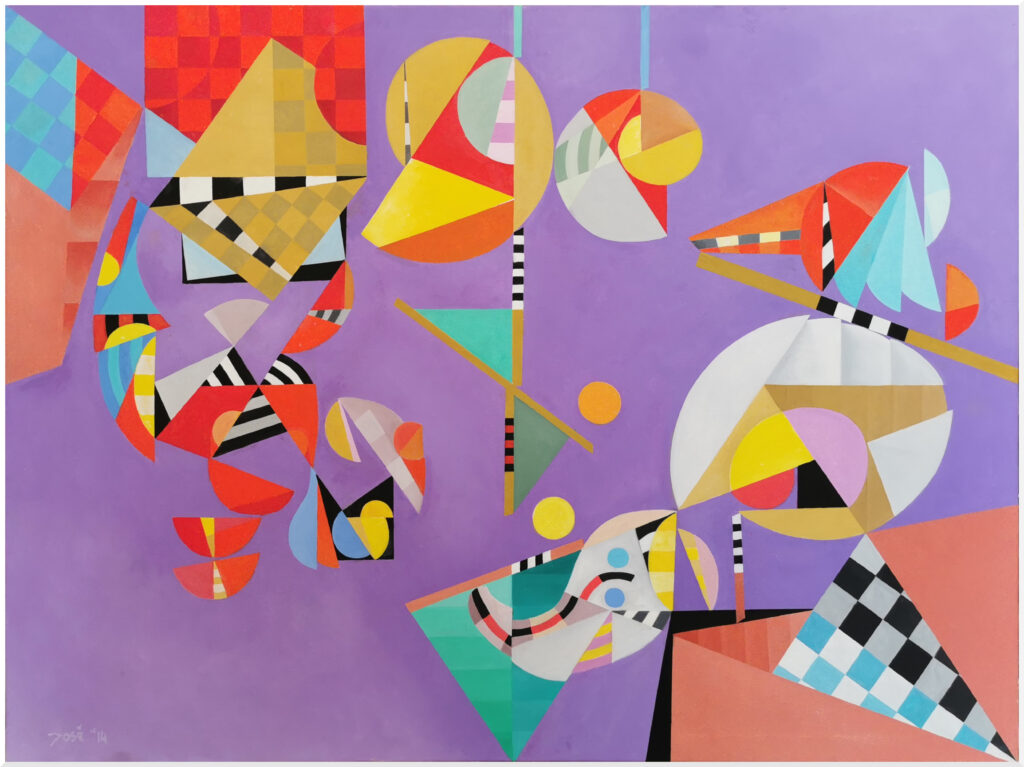
IR - Article published in the OPPERTEINER ETADTANZEIGER - (Germany 1994)

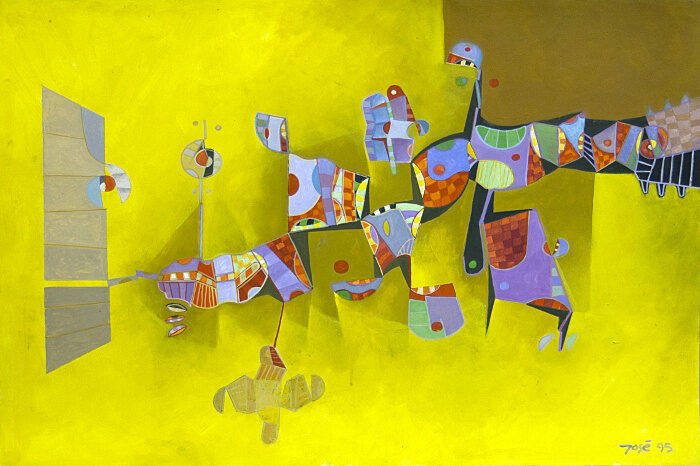
"As KANDINSKY in his time, José PEREIRA compares painting with music and literature, these three arts being subjected to strict rules and some conventions.
The artistic act has for origin the variety of relationships between the plastic components, giving them a new meaning.
José PEREIRA’s language transposes elements of color and forms known since DELAUNAY and MIRO.
The geometrical forms submerged in meaningful colors, describe their most intimate sentiments and their relations with the world.
The observer can read and even interpret, in a total opposite way the abstract and surrealist vision of the Artist.
The fact of giving up, in a deliverate way to entitle his works let the spectator enter without prejudice into his inner world..."
DIERHEINPFALZ - Annette Hoffmann (Germany 1994)

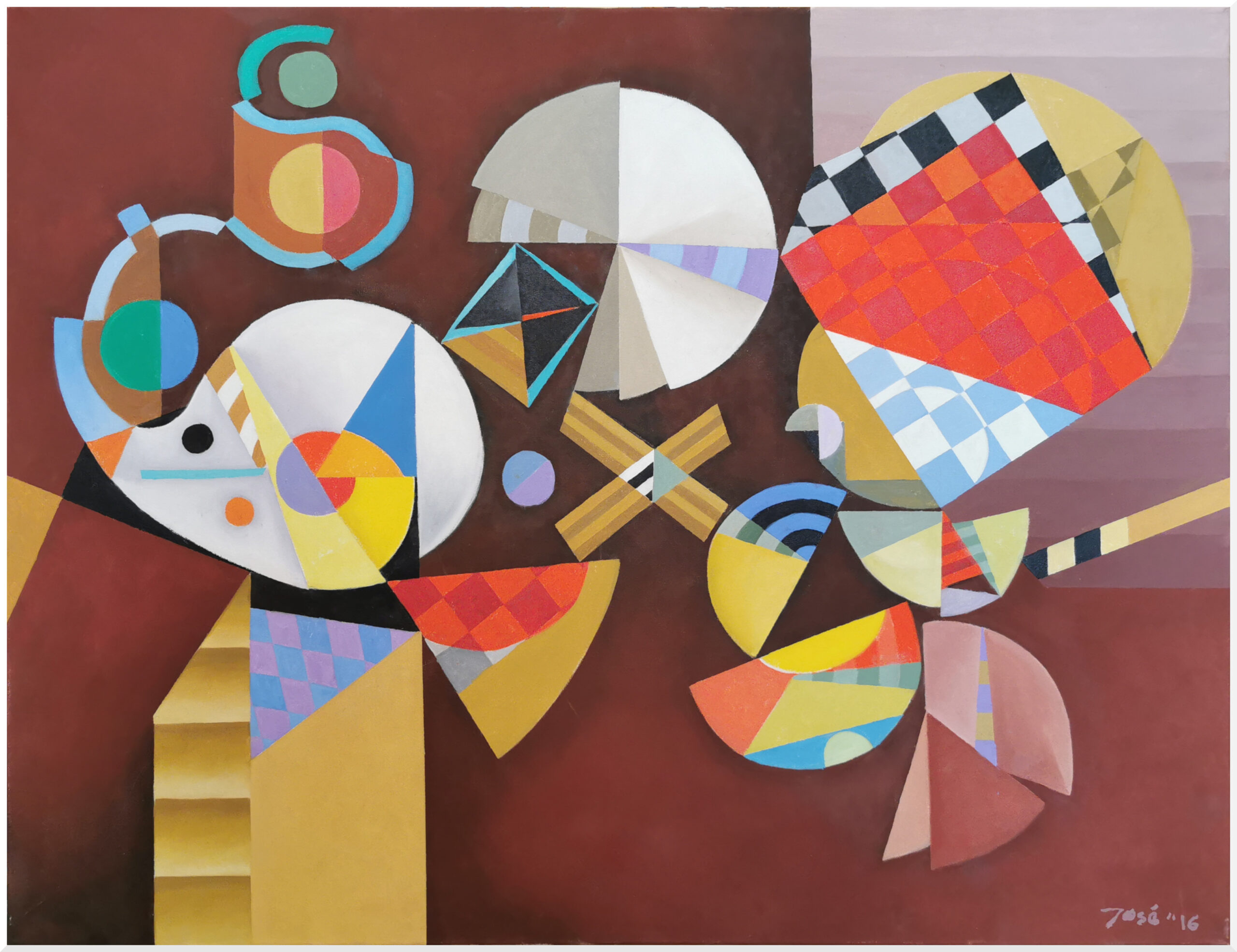
"... In the middle of José Pereira’s observations, is the man in his relation with the environment, loaded with tensions and in which he moves and merges.
In certain paintings the Universe of forms merges with its environment and is transformed, being allowed to be absorbed in certain cases, or even falling into pieces, seemingly without weight, in an iridescent plurality, getting loose from the simplicity of the bottom.
Men and women are reduced to the strict essentials of their characteristics, some time depersonalized behind their face; carrying masks, but communicating among them in continual forms and constant movement, by dancing, embracing or separating..."

DIERHEINPFALZ - Annette Hoffmann (Germany 1994)

"...The works give a supplementary dynamics by becoming integrated into another dimension: the Time.
From a plurality of perspectives is born the illusion of time, successions of movements of forms which approach or go away giving us the idea of evolution in the space and the time.
What is offered to the eyes of the spectators is not at all a muddled puzzle, but indeed a thoughtful concept based on a system of complex and artistic symbols."
DIERHEINPFALZ - Annette Hoffmann (Germany 1994)

“A great admirer of Joaquin Torres Garcia, who introduced modern art into Uruguayan cultural life, José Pereira is closer to Klee and especially to Kandinsky's Parisian period.
At the same time, he was preoccupied with cosmic concerns and reflected on the laws of genetics, and even on the birth of mankind.
Thanks to such an encounter, his painting expands, airy, joyful and almost dance-like, and the result is the most stimulating I've ever seen.”

Italo-French Cultural Association (Bari – Italy) - José Pierre (Italy 1983)

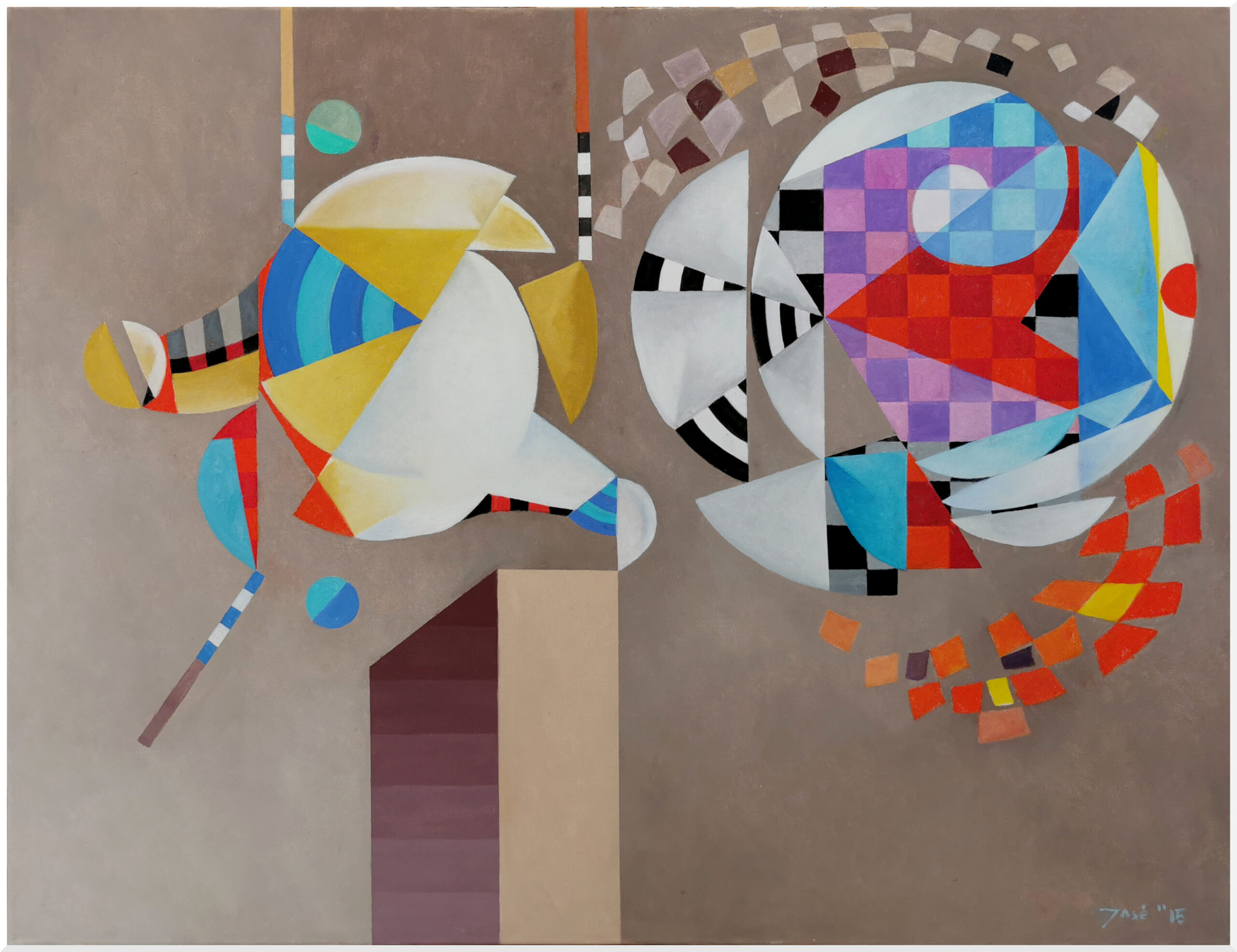
“Possessor of an inexhaustible imagination, his work seems that of a magical painter.
His powerful suggestion evokes the calligraphic language of a Klee, and each of his canvases exhibits the beauty of a great cosmic night.”
El País – Dardo Billotto (Montevideo Uruguay 1982)

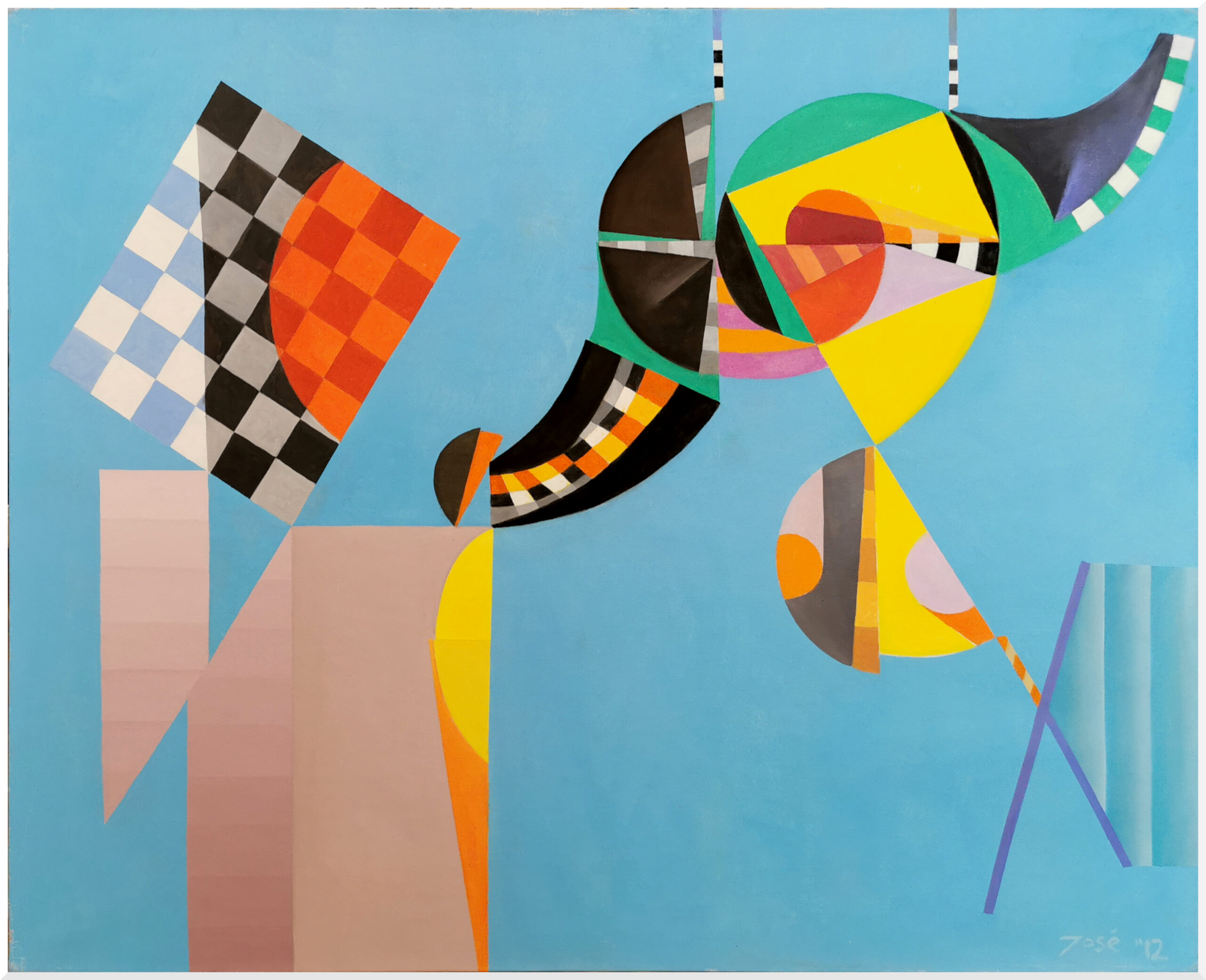
“In the painter's profession, where - as Braque said - the first 70 years are the hardest, José Pereira is like a youngster who is nonetheless slowly rising to international stardom.
Sign painting? You evoke Klee rightly or wrongly? Klee's painting is also “magical”.
And this is unquestionably true of José Pereira's work, where every form has its own “charge”, and every symbol is in a state of activation.”
Art-Culture - Jacques Collard (Belgium 1976)